

Best Hotels in Scandinavia for Spring: Design, Wellness and Nordic Escapes
Spring in Scandinavia doesn’t arrive with a bang—it unfolds. Snow softens into streams, cities stretch back into daylight, and the landscape shifts from monochrome to something far more nuanced. It’s also when the region arguably makes the most sense to visit: fewer crowds, longer days, and a rhythm that feels balanced rather than extreme.
Alongside this seasonal shift, a new generation of hotels is quietly redefining what Nordic travel looks like. Less about minimalism for its own sake, more about atmosphere, sociability and a stronger sense of place. Leading that change is ESS Group, a Swedish hospitality company building a portfolio that spans coastal estates, mountain retreats and urban resorts—each with a distinct personality.
Here’s where to check in now.
A Coastal Estate That Balances Heritage and Energy
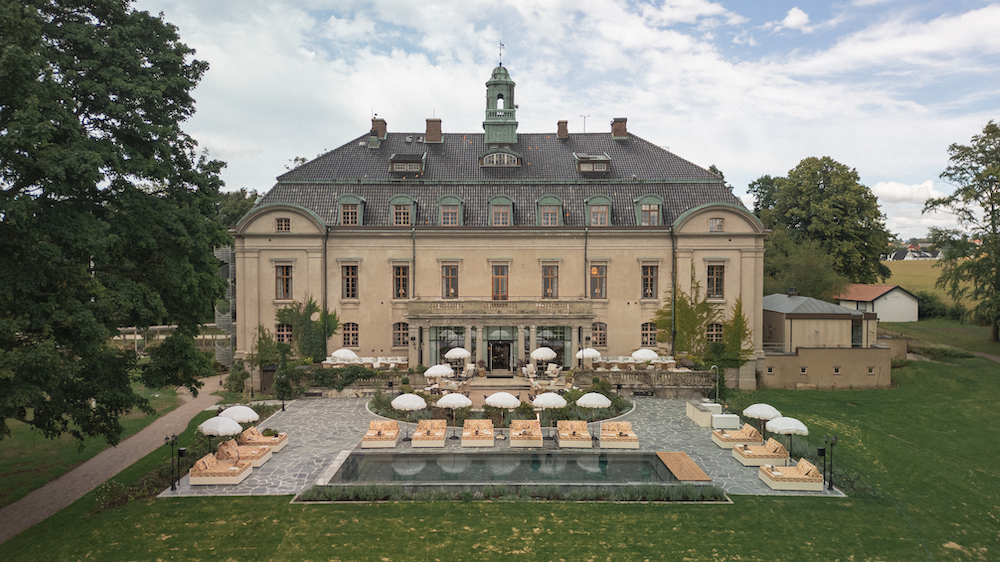
Set along Sweden’s southern coastline, Maryhill Estate offers a version of the countryside that feels anything but sleepy.
The property is anchored in the restored Örenäs Castle, originally built in 1918, but the experience is split between two contrasting identities. The historic “Hill House” leans into classic elegance, while the newer Sugar Club introduces a more contemporary, social energy—think poolside lounging, garden courts and a steady flow between indoors and out.
Its location, roughly 40 minutes from Malmö and an hour from Copenhagen, makes it an easy detour for those travelling between Sweden and Denmark. But the real draw is how it uses space: tennis courts sit alongside croquet lawns, forest-edge walks overlook the Öresund Strait, and long lunches tend to blur into early evening drinks. It’s less about programming every moment and more about letting the setting do the work.
Mountain Living, Without the Hard Edges
Further north, in Norway’s Hemsedal valley, Fýri Resort takes a different approach to Nordic escape.
Positioned 625 metres above sea level, the resort is surrounded by one of Scandinavia’s most established alpine regions. While winter draws skiers, spring and early summer open up over 40 hiking trails, along with cycling routes, fly-fishing rivers and access to quieter, less-travelled parts of the mountains.
The design leans heavily into tactile materials—stone, timber, wool—creating a sense of warmth that offsets the scale of the landscape outside. At its centre is a 1,000-square-metre pool club, where heated indoor-outdoor pools and firepits make lingering feel entirely justified, even as temperatures fluctuate.
It’s a place that works equally well for doing very little or quite a lot, depending on your tolerance for fresh air and uphill terrain.
Stockholm’s Beach Club Alternative
Cities in Scandinavia tend to be efficient, composed, and—at times—slightly restrained. Ellery Beach House is none of those things.
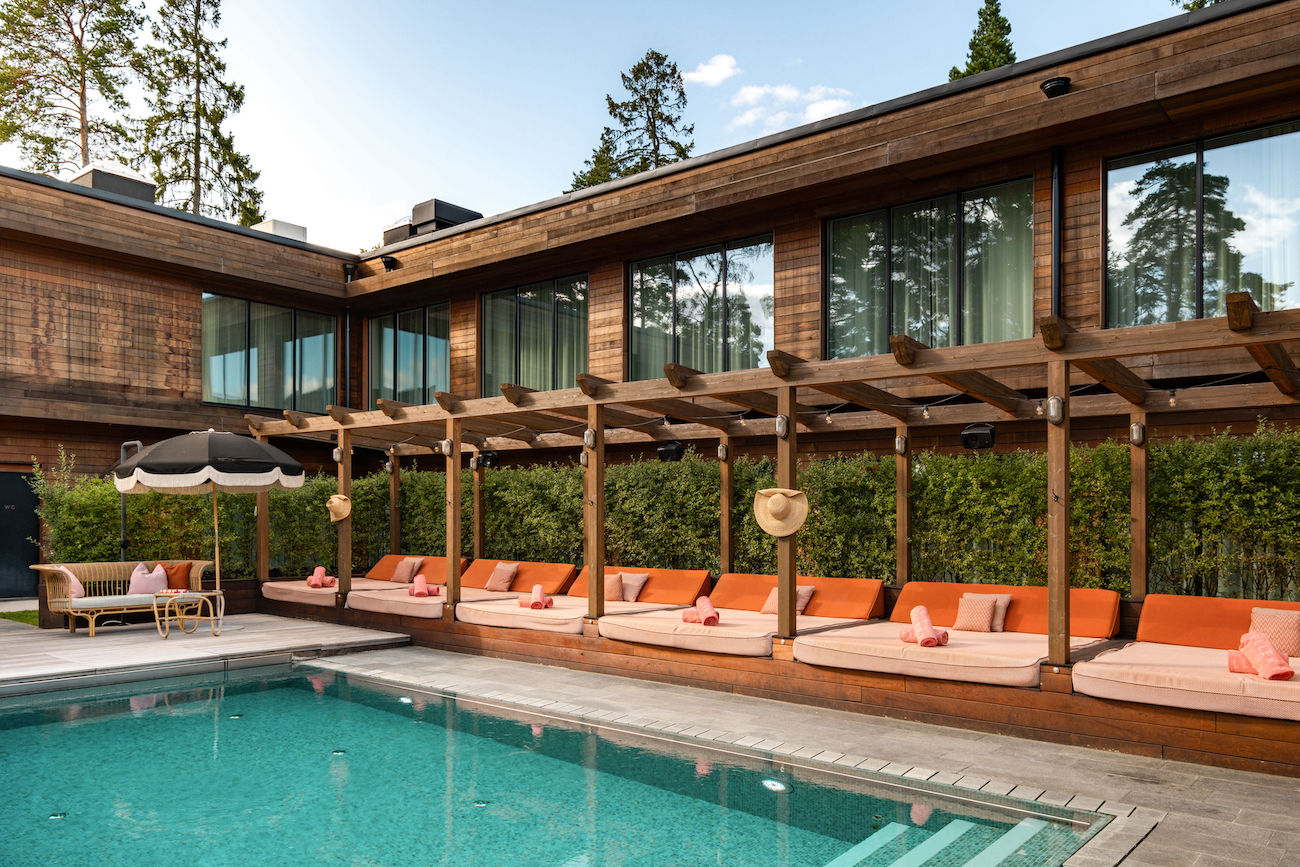
Located just 20 minutes from central Stockholm, the hotel sits where forest meets shoreline, and leans fully into a more playful identity. The design references 1960s and 70s Palm Springs—curved lines, pastel tones, layered textures—without feeling like a theme.
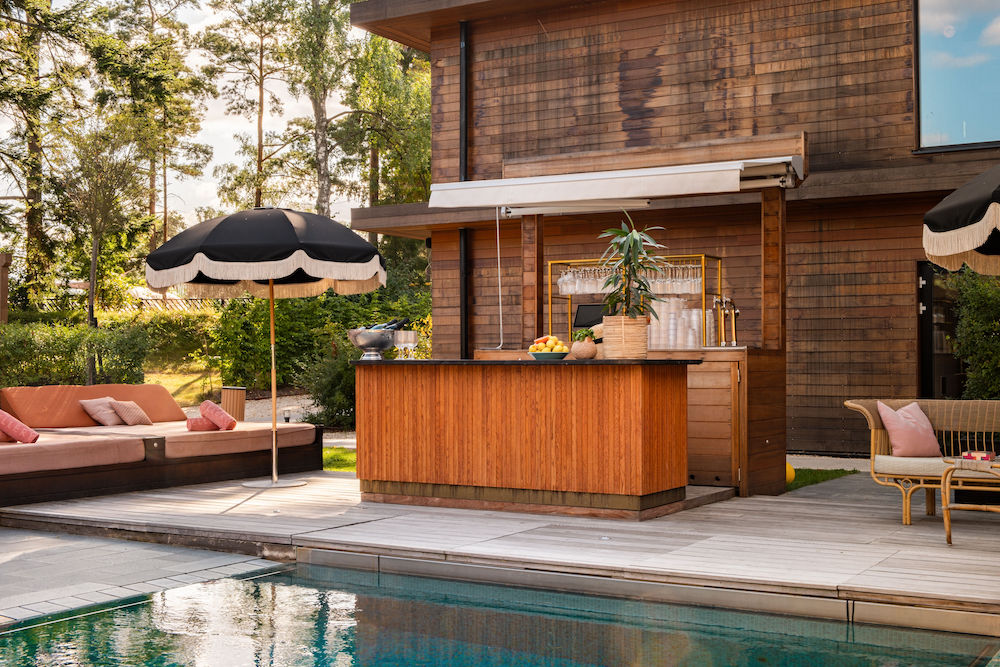
The focal point is its beach club setup: multiple heated pools, a private pier, saunas and an outdoor gym, all orbiting around Coco Beach Club, where the atmosphere is deliberately more social. There’s music, there’s movement, and there’s a noticeable shift from the typical Scandinavian understatement.
It also taps into the growing “bleisure” trend—spaces that function equally well for work and downtime—making it as suited to a midweek reset as a long weekend.
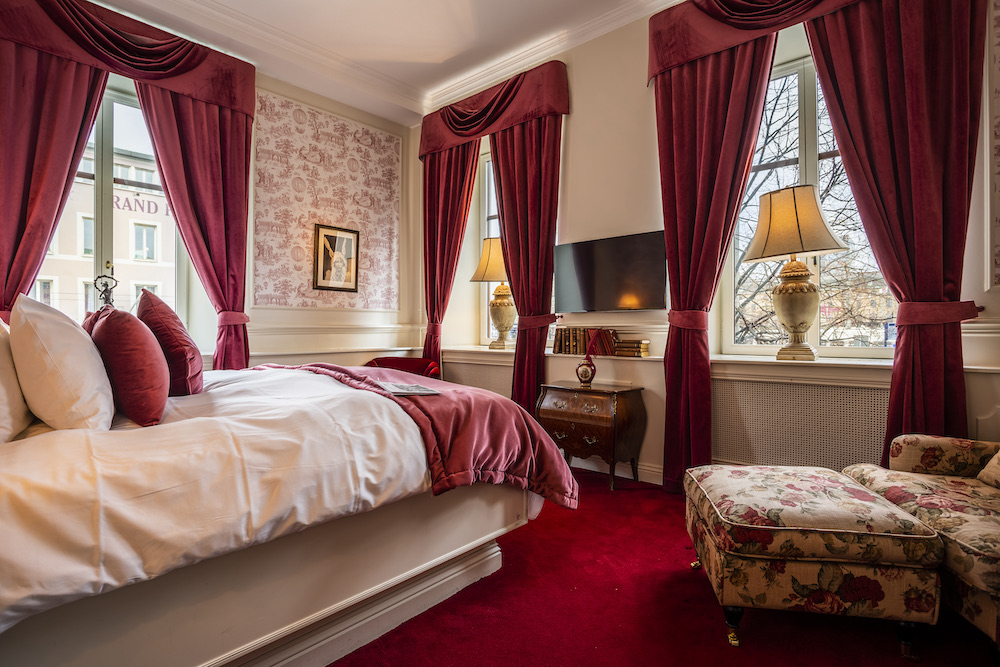
A Boutique Hotel with a Theatrical Streak
In Gothenburg, Hotel Pigalle offers something altogether more intimate—and slightly more eccentric.
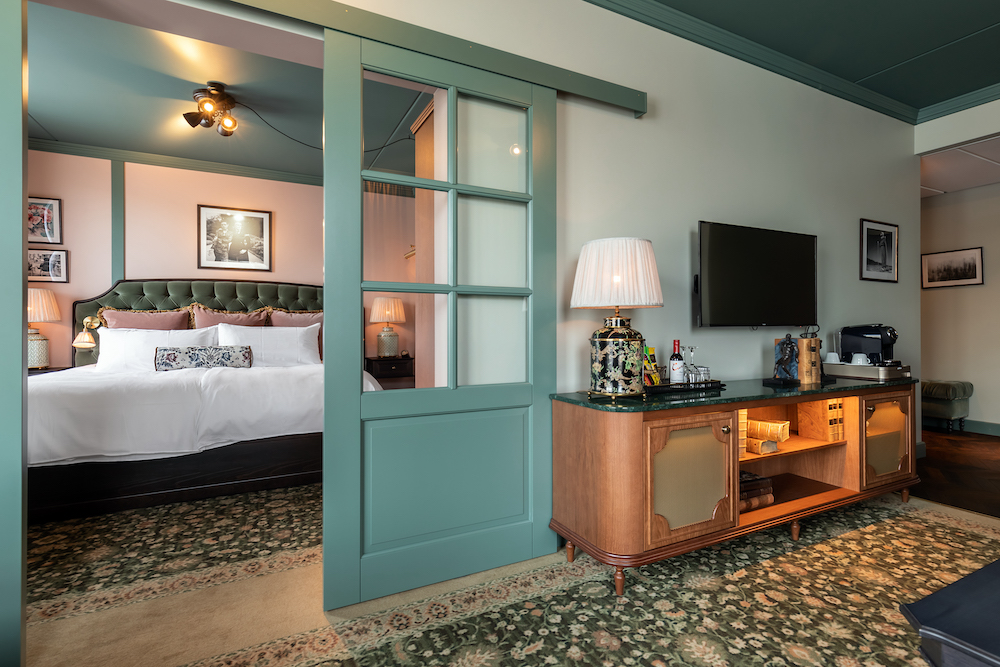
Set inside an 18th-century building near the central station, the hotel draws heavily on Parisian influences, from velvet textures to patterned wallpapers, but grounds them in Scandinavian precision. The result is layered rather than overwhelming.
Its 81 rooms are individually styled, which is increasingly rare in a market that often favours uniformity. Downstairs, a piano bar hums into the evening, while the rooftop terrace offers a quieter counterpoint with views across the city.
It’s not trying to be minimalist, and that’s precisely the point.
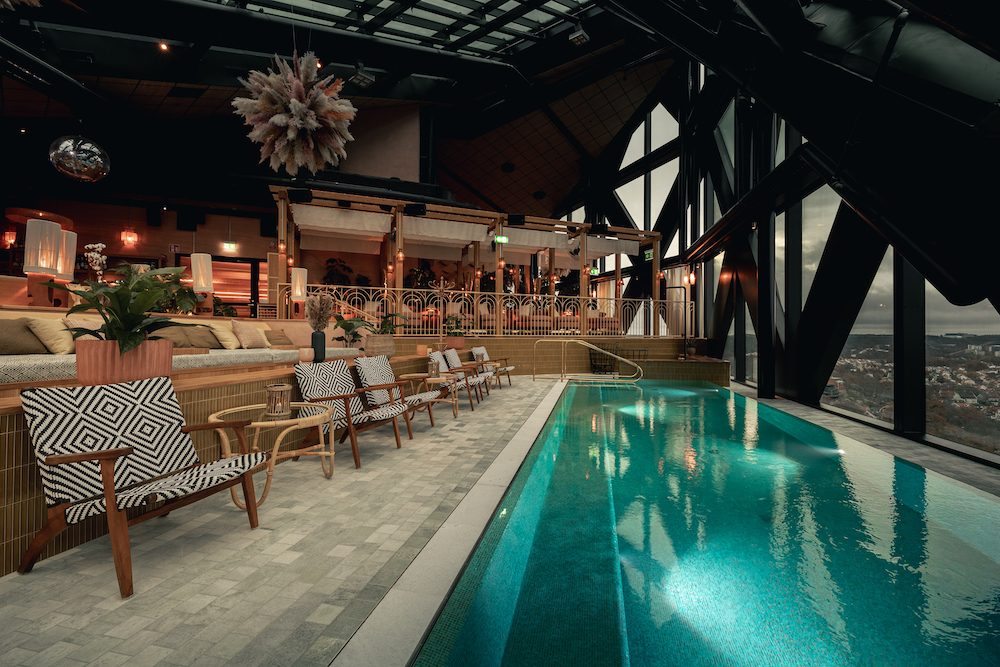
A City Hotel That Thinks Like a Resort
Also in Gothenburg, Jacy’z Hotel & Resort takes the opposite approach: scale, height and a certain sense of spectacle.
Rising 27 storeys above the city, the glass tower houses over 200 rooms along with multiple restaurants, performance spaces and two pool क्लब levels that bring a beach-club sensibility indoors. The hotel describes itself as “27 floors of entertainment,” which sounds ambitious, but isn’t entirely inaccurate.
What’s notable is how it blends resort-style amenities with an urban setting. You’re minutes from the city centre, but the experience is largely self-contained—more akin to a vertical destination than a traditional hotel.
Why Scandinavia Works Right Now
Spring is when Scandinavia feels most balanced. Winter’s intensity has passed, summer’s crowds haven’t yet arrived, and the long daylight hours begin to return. In cities like Stockholm and Gothenburg, that translates into outdoor dining and waterfront activity; in places like Hemsedal, it means access to landscapes that are often overlooked outside ski season.
What ties these hotels together isn’t a single aesthetic, but a shared shift in philosophy. Nordic hospitality is moving beyond strict minimalism into something more layered—still design-conscious, but also social, experiential and, increasingly, a little less serious.
Which, after all, makes it easier to enjoy.


