

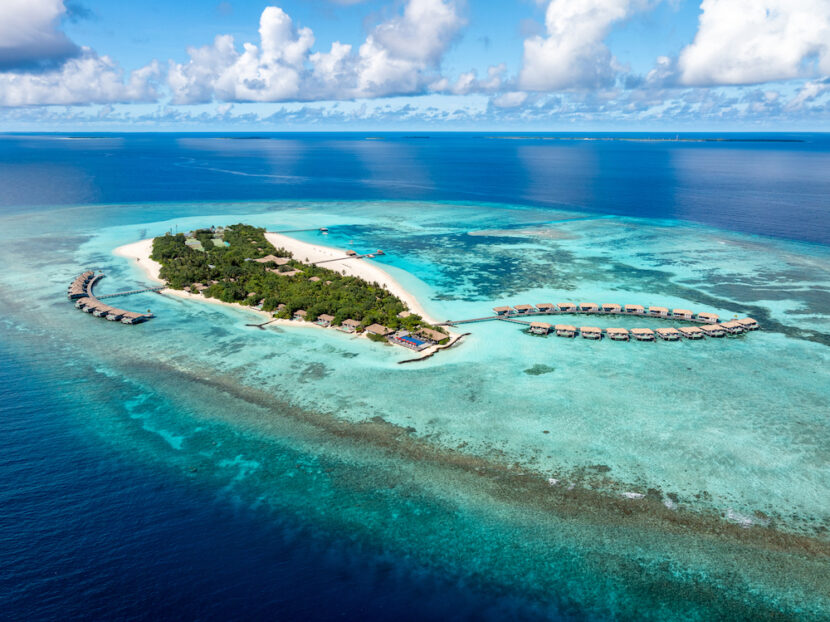
Why the Maldives in “Green Season” Might Be the Best Decision You Make This Year
Let’s get the elephant out of the lagoon immediately: yes, it rains in the Maldives during summer. Sometimes it rains dramatically — the kind of torrential tropical downpour that turns the sky into a curtain of silver and makes you feel like you’re living inside a nature documentary. Then, twenty minutes later, the sun comes back, the puddles vanish, and the ocean looks more absurdly blue than it did before.
This is the Maldives’ so-called “green season” — June through October — and it’s the most misunderstood window in luxury travel. Everyone who’s anyone will tell you to visit between November and April, when the skies are reliably clear and the price tags reflect it. But here’s what they’re missing: green season is when the Maldives actually breathes. The beaches are emptier. The resorts drop their rates (sometimes significantly). The marine life is more active — this is peak season for whale shark and manta ray encounters in the South Ari Atoll. And the new generation of private island resorts coming online in 2026 is purpose-built for exactly this kind of slower, deeper, more immersive stay.
If you’ve been waiting for a sign to book the Maldives outside of peak season, this is it.
The Rain Nobody Talks About (and Why That’s a Good Thing)
The monsoon in the Maldives isn’t the all-day, week-long washout you might picture from Southeast Asian rainy seasons. It’s theatrical and brief. The rains sweep in, perform their dramatic show, and leave. What follows is a kind of clarity — the air feels washed clean, the light goes soft and golden, and the ocean transitions through shades of turquoise you didn’t know existed.
More importantly, the green season shifts the rhythm of a Maldivian holiday. When the sun is guaranteed every day, there’s a quiet pressure to maximise it — snorkel at dawn, sunbathe at noon, sunset cruise at five. When the weather is more unpredictable, you surrender to the island’s pace. A rainstorm becomes an invitation to disappear into a spa for three hours. A grey afternoon becomes the perfect excuse to finally try that cooking class, or to lie in your villa with a book and the sound of rain on the roof — which, in an overwater villa, is one of the great unsung luxury experiences in travel.
The resorts that understand green season know this implicitly. They’re not just tolerating the weather; they’re designed for it. Indoor-outdoor flow, world-class spas, kids’ clubs that are genuinely engaging rather than afterthoughts, and dining concepts that make staying in feel like an upgrade rather than a compromise.
Three Islands That Are Rewriting the Maldives Playbook
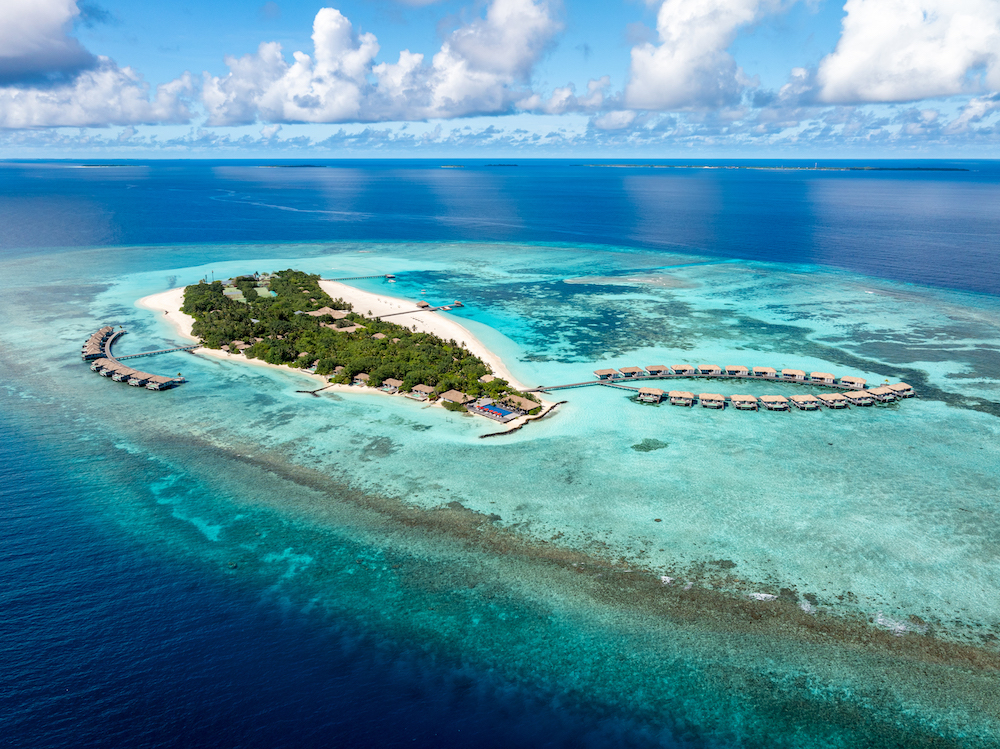
Noku Maldives — The Introvert’s Island
Fifty villas on a private island in the Noonu Atoll. No crowds, no noise, no competing for sunset spots. Noku Maldives — part of IHG’s Vignette Collection — feels like it was designed by someone who genuinely understands the appeal of solitude.
The numbers tell part of the story: 20 beach villas, 30 overwater villas, ranging from 175 to 400 square metres. Many have private pools. But it’s the texture of the experience that matters — “Destination Dining” that sets a private table on the shoreline for two, cultural evenings with traditional Boduberu drumming, nature walks that are as much about listening as they are about looking. This is an island for people who want their luxury served quietly.
When the rain comes, Noku Spa steps up with treatments rooted in natural ingredients — the kind of holistic, unhurried therapy that makes you forget there was ever a sky. Rates start from USD 613++ per night, including breakfast, which during green season feels like extraordinary value for a resort of this calibre.
Rates at Noku Maldives, Vignette Collection start from USD 613++ per night, including breakfast. For more information, please click here.
Centara Grand Lagoon Maldives — The Fun-Seeker’s Compound
Not everyone goes to the Maldives to sit in silence. Some people want water parks, lazy rivers, five restaurants, and a kids’ club that actually exhausts their children. If that’s your speed — and honestly, even if you think it isn’t, travelling with a family might change your mind — Centara Grand Lagoon Maldives in the North Malé Atoll is the most compelling argument for green-season family travel.
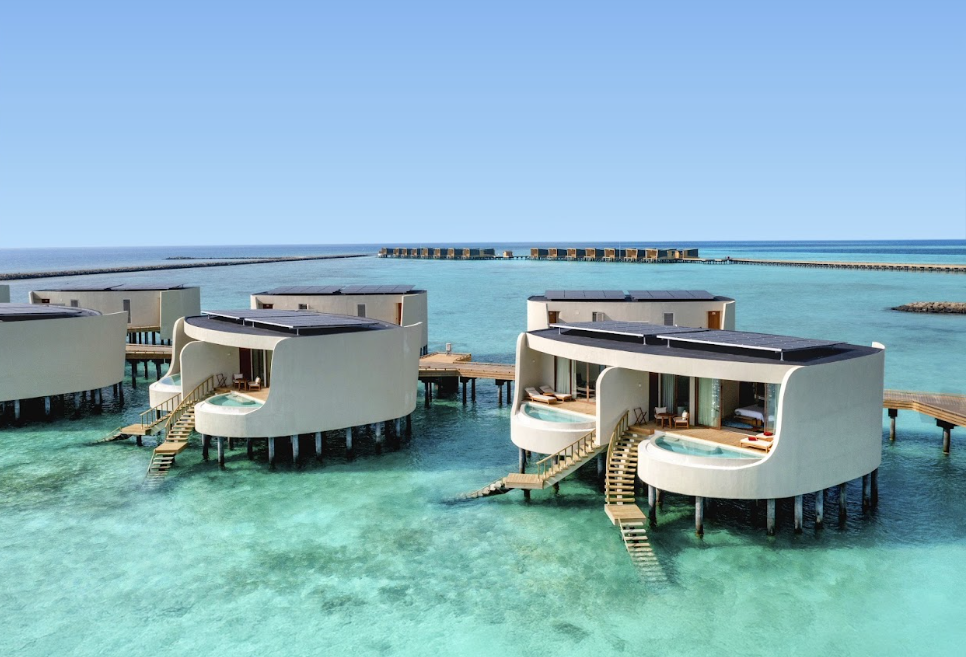
Part of the ambitious Atollia multi-island development, this is Centara’s fourth property in the Maldives, and the Thai hospitality group has clearly learned what works. Every villa — beachfront or overwater — comes with a private pool, a Jacuzzi, or both. Connecting villas handle the logistics of group travel. Five restaurants and bars span Thai, Italian, and international cuisines with live cooking stations. And next door, the Centara Mirage Lagoon Maldives features a water park with the longest lazy river in the country.
The genius of Centara Grand Lagoon during green season is that it’s essentially a self-contained universe. Rain or shine, there’s always something happening — and the “Summer of Island Elegance” offer throws in complimentary speedboat transfers for stays of four nights or more, which is a meaningful saving when you’re travelling as a family.
Under the “Summer of Island Elegance” offer, bookings of four nights or longer will include complimentary roundtrip speedboat transfers. To learn more, please click here.
V Villas Maldives at Mirihi — The Quiet Luxurist’s Escape
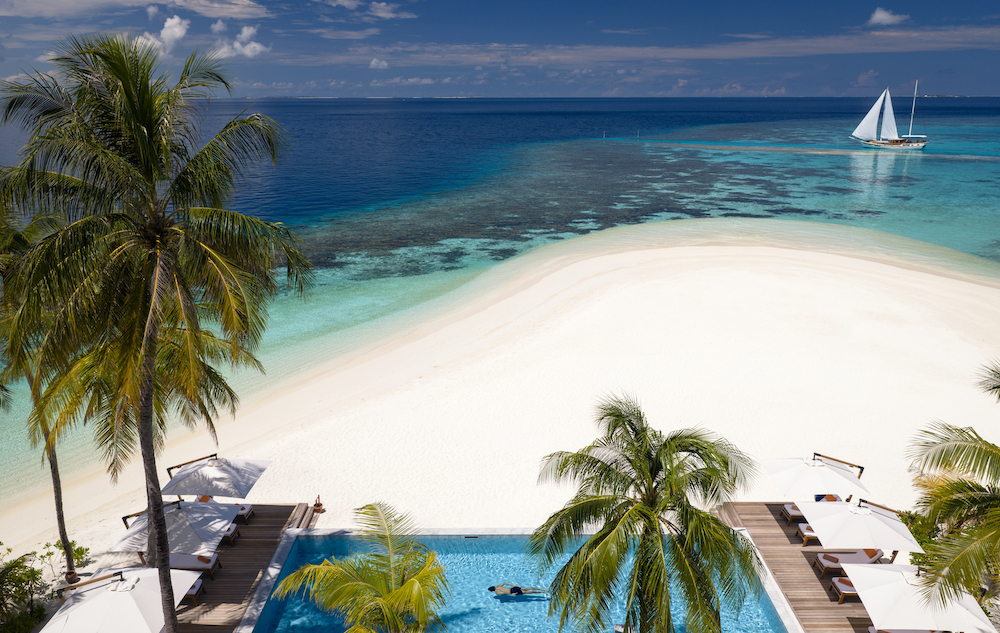
Some places don’t need to shout. V Villas at Mirihi — part of Accor’s MGallery Collection — is one of them. Forty-two villas. A 30-minute seaplane from Malé. Butler service. Four new overwater villas with private pools that feel suspended between the sky and the lagoon.
What sets V Villas apart isn’t just the size or the service — it’s the “M Moment,” MGallery’s signature concept of a cultural experience unique to each property. Here, that means the Mirihi Thari, a private yacht offering full-day voyages across the South Ari Atoll with an agenda that reads like a fantasy itinerary: whale sharks, manta rays, sea turtles, and a chef preparing drinks and canapés on board. Green season is when these waters come alive with megafauna — this is arguably the best time of year to be on a boat in this atoll.
Back on land, Muraka restaurant serves freshly caught Maldivian lobster in an overwater setting, while the Akoya Sea Lounge does tropical cocktails as the sun dips below the horizon. The Mirihi Spa takes wellness into more experimental territory with sound healing, guided meditation, and aerial yoga — the kind of programming that transforms a rainy afternoon into something unexpectedly transcendent.
Rates start from USD 600 per night. For more information, please click here.
The New Independents Are Coming
Beyond the established international brands, something more interesting is brewing.
SIX & SIX Private Islands is developing a collection of six architecturally distinct private island resorts — beginning with RAH GILI Maldives, a nature-led sanctuary, and DON MAAGA Maldives, described as an “epicurean haven.” Each island will have its own architectural identity and narrative, which is a departure from the increasingly homogenised resort experience across the archipelago.
What’s particularly notable is that selected villas and residences within these properties will be available for purchase — a rare opportunity in a country where private land ownership by foreigners has historically been labyrinthine. Whether this represents the future of Maldivian luxury hospitality or a niche investment vehicle remains to be seen, but it signals that the Maldives is evolving beyond pure resort tourism into something more layered.
Getting There (and Getting Smarter About It)
The practical reality of green season travel is that flight schedules and transfers can be more affected by weather than during peak months. Seaplane transfers — the default mode of transport to many resorts — occasionally face delays, which is worth building into your itinerary with a buffer day.
For those who prefer to skip the logistics altogether (and have the means), private jet travel to Malé is increasingly common among the luxury travel set, cutting transit time and eliminating the chaos of connecting flights through regional hubs. It also allows for flexible timing — useful when you’re trying to thread the needle between monsoon showers.
Properties like Amilla Maldives Resort and Veligandu Maldives have long understood the value of seamless arrival experiences, and the newer entrants are following suit — Centara’s complimentary speedboat transfer offer is a good example of removing friction at the point where travellers are most vulnerable to weather disruption.
The Real Secret of Green Season
Here’s the thing nobody in the luxury travel industry will say out loud: the Maldives in peak season is perfect, and perfection can be boring. The sky is always blue, the sea is always calm, the photos always look the same. There’s no surprise, no narrative, no story to tell when you get home.
Green season gives you the story. The afternoon storm that chased you into the spa where you discovered the best massage of your life. The grey morning that broke into the most spectacular sunset you’ve ever seen, precisely because it was unexpected. The whale shark that appeared on a snorkelling trip you almost cancelled because the sky looked ominous.
The Maldives doesn’t need perfect weather to be extraordinary. It just needs you to show up with the right mindset — and the right island.
Explore the Full Maldives Luxury Guide
From private island resorts and overwater bungalows to wellness sanctuaries and underwater dining experiences, this article is part of our comprehensive 2026 series on luxury travel in the Maldives.
Discover the complete guide featuring the best hotels, villas, resorts and cultural experiences across the archipelago:
View the Maldives Luxury Guide 2026
Luxury Travel Editorial Series • Maldives Edition 2026